
Ear Training Without Sheet Music: the New Learning Path in cori
July 21, 2026
•

Jonas Deuchler
Founder, coriMost of the choirs we talk to meet once a week. Ninety minutes in which the director has to get a whole programme over the line – and in which there is often little time left for the individual voice. In between lie six days when everyone is on their own. Anyone who wants to practise ear training in that gap is quickly left standing there: some can't read music and therefore don't dare to try anything at all, others simply don't know what they should be practising. "Train your ear" is good advice – it just doesn't tell anyone where to start.
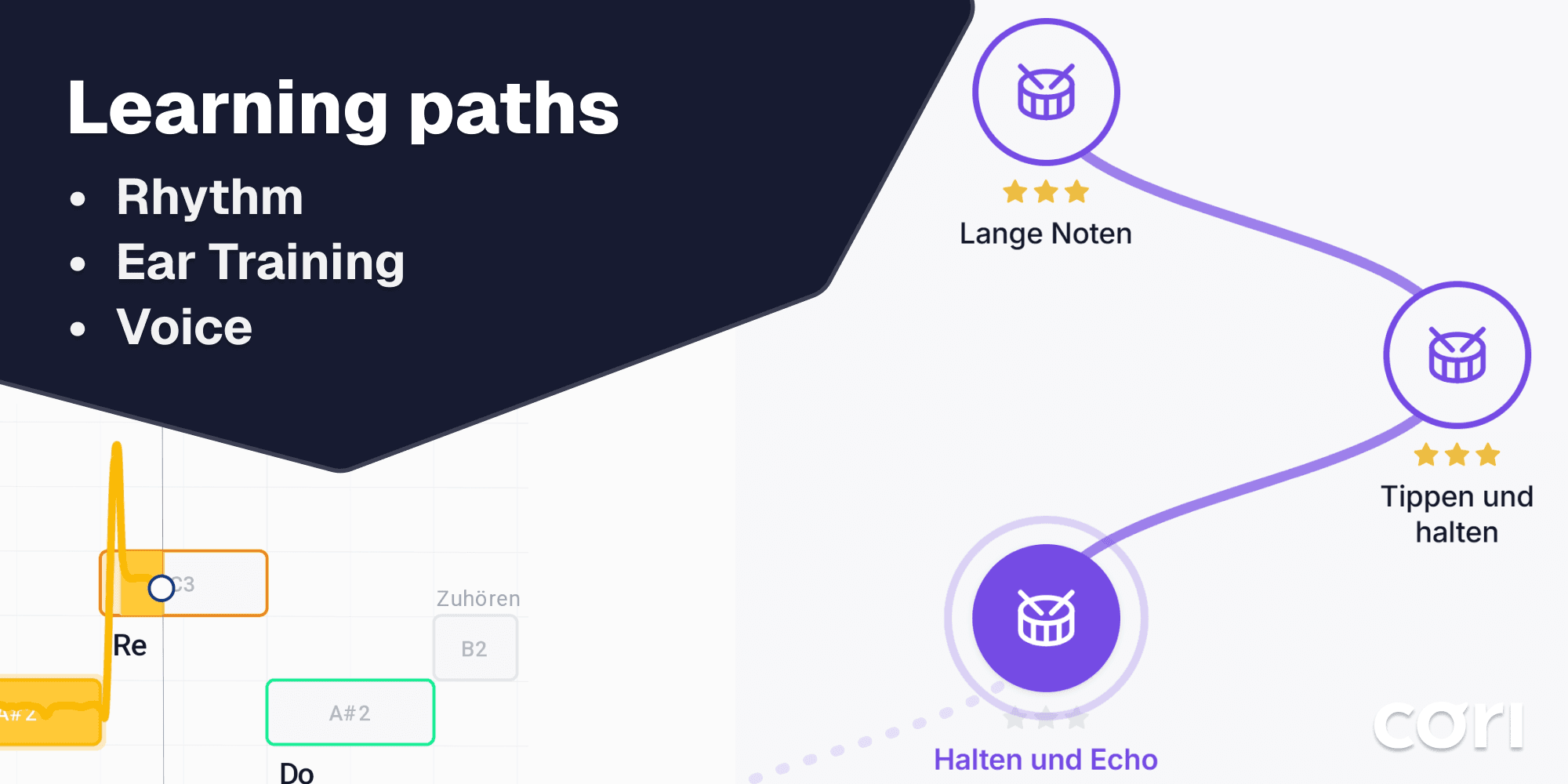
That's exactly where the new Learning Path in cori comes in. Instead of a loose collection of exercises there is now a clear route: small units that build on each other, from the first "Which note is higher?" to real melodies and chord colours. You don't need to read music, cram theory or know what an interval is. You tap "Start" and off you go. And the best part: from now on the Learning Path isn't only in the app, it's in the browser too – on your laptop, on your tablet, wherever you are.
The short version:
- Ear training, rhythm and voice in one path made of small, cumulative stations
- Exercises of two to three minutes – no reading music, no prior knowledge
- Singing exercises automatically in your vocal range, rhythm with latency calibration
- Runs in the cori app and in the browser, with the same progress on every device
What the Learning Path in cori is
If you've ever used a language app you know the principle: a path of small stations you unlock one after another. That's exactly how the Learning Path in cori feels. Each station is a short exercise – two or three minutes, no more. You do one, get feedback straight away, and the next one goes a tiny bit further.
The beginning is deliberately kept low-threshold. The first stations are called "Higher or lower?" and "Where is the melody going?" – things anyone can do right away, even with no musical background whatsoever. That's on purpose. We wanted the first success to happen in the first minute, not in the first week. From there it gets finer step by step: the notes move closer together, single sounds become short melodies, and at some point you hear whether a chord sounds happy or sad long before anyone has explained the words "major" and "minor" to you.
Learning ear training without sheet music
This matters enough to us to deserve its own paragraph: the Learning Path works entirely without reading music. A large share of the people who sing and love doing it never learned to read notation – and that is completely fine. You hear music with your ears, not with your eyes.
That's why in cori listening and doing come first, and theory at most creeps in quietly afterwards. Where notes do appear they are help, not an obstacle: a small stave shows you what you just heard, with a question mark where you're meant to guess. If you read music, you'll be glad it's there. If you don't, you simply ignore it and keep listening. Nobody gets held up because a symbol means nothing to them.
Ear training, rhythm, voice: the three branches of the Learning Path
After the first shared steps the Learning Path splits into three directions. You choose what you're in the mood for – and you can switch at any time.
Ear training: hearing pitches, melodies and chords
This is where you train your ear: telling pitches apart, recognising how a melody moves, learning to hear intervals and placing notes within a key. It's the skill that gives you the most confidence in a choir – if you already hear your own line in your head before it comes, you'll hit it too. And once you can anticipate your notes, sight singing gets considerably easier later on.
Rhythm: practising timing, with no singing at all
Pure timing, with no singing at all. You tap rhythms along to a metronome, from "Hold the beat" to trickier patterns. Ideal for in-between moments, because you don't even have to open your mouth – so it works on the train too.
Voice: hitting notes with real-time feedback
Here you sing yourself. cori listens through the microphone and shows you whether you're hitting the note. No audience, no judgement – just you and honest, patient feedback.
Each of these routes is a small ladder with several rungs, and every rung can be skipped if you already have it down. So you don't have to drag yourself through things you've long since mastered.
| Area | What you train | Ideal for | What you need |
|---|---|---|---|
| Ear training | hearing pitches, melodies and chords | quiet minutes with headphones | just your ears |
| Rhythm | tapping timing and patterns | on the move, with no sound at all | just your hands |
| Voice | hitting notes and singing cleanly | an undisturbed moment | your voice and a microphone |
The Learning Path adapts to your vocal range
An exercise that sounds the same for everyone is too high for half the group and too low for the other half. That's why cori adapts to your voice.
Before the singing exercises really get going there's a small range finder: you sing a few notes up and down, cori remembers where your voice is at home, and from then on transposes the exercises into exactly your range. A bass gets the same exercise an octave lower than a soprano – without you having to set anything.
The rhythm exercises have their counterpart: a short calibration where you tap along to the beat a few times. That way cori compensates for the tiny delay that every phone and above all every pair of Bluetooth headphones brings with it – so that "on the beat" really does mean "on the beat" and doesn't fail because of your hardware.
Sticking with it: XP, streak and badges
Practising rarely fails because of ability and almost always because of sticking with it. So there's a bit of gentle motivation built into the Learning Path – but in moderation, without a confetti storm.
For every exercise you collect XP and gradually level up. A streak counts the days in a row you've practised – two minutes a day keep it alive, and if you do miss a day a shield catches you before everything starts from zero. A small daily goal shows when you've done enough for today, and every so often there's a badge for a stage you've completed. It all comes together in a single, calm display – no zoo of points, coins and hearts competing for your attention. We want you to sing better, not to get stuck in an app.
You don't have to practise for half an hour at a stretch to get better. One single exercise a day, done consistently over a few weeks, achieves more than the grand resolution you drop again after three days. The Learning Path is built for exactly that: short units that squeeze into any day.
Practising ear training online: the Learning Path in the browser
Until now the Learning Path was only in the cori app for your phone. From now on it runs in the browser just the same – you open cori on your laptop or tablet and carry on where you left off on your phone. Progress, streak, level and badges come along. There's nothing to install: practising ear training online really does just mean opening a page here.
For directors that means, incidentally: you can show the Learning Path on a big screen before rehearsal without everyone squinting at a tiny phone display. And if you'd rather sit at a computer than at a phone, you no longer have to choose.
Privacy: what happens with your microphone and your progress
Because the microphone is listening while you practise, the note matters to us: the pitch analysis for the singing exercises happens directly on your device, and nothing goes to ad networks, because there simply aren't any in cori. Your practice progress belongs to you, is processed in line with the GDPR and is not sold. Full stop.
Frequently asked questions about the Learning Path
Do I need to read music to do ear training with cori? No. The Learning Path is built from the ground up so you can start with no knowledge of notation at all. Where notes do appear they are an optional aid – use them or ignore them and simply listen.
Who is the Learning Path for – beginners or advanced singers? Both. The path starts with the simplest basics ("Which note is higher?") and gets more demanding step by step. You can skip levels you already have down, so advanced singers don't have to start from zero.
What can I practise with cori? Three areas: ear training (hearing pitches, melodies and chords), rhythm (timing, with no singing at all) and your own voice (hitting notes, with feedback through the microphone).
How much time do I need to practise? Each exercise takes just two to three minutes. A single exercise a day is enough to keep your streak alive and to keep getting better.
Do I need a microphone for the Learning Path? Only for the singing exercises. Ear training and rhythm work without one – for the ear exercises you just need headphones or speakers, for rhythm only the screen.
Do the exercises adapt to my vocal range? Yes. The range finder lets cori remember where your voice sits and transposes the singing exercises into your range automatically – whether you sing bass or soprano.
Can I practise ear training online in the browser? Yes. The Learning Path runs in the phone app and in the browser on your laptop or tablet. Your progress is the same everywhere.
When will I notice the first progress? The feedback is immediate – after every single exercise you see what landed. What counts for how you feel in the choir is above all regularity: short sessions over several weeks do more than one long stretch at the weekend.
How to get started with the Learning Path
The Learning Path is there for everyone with the current release – three steps and you're in:
If you're new to cori:


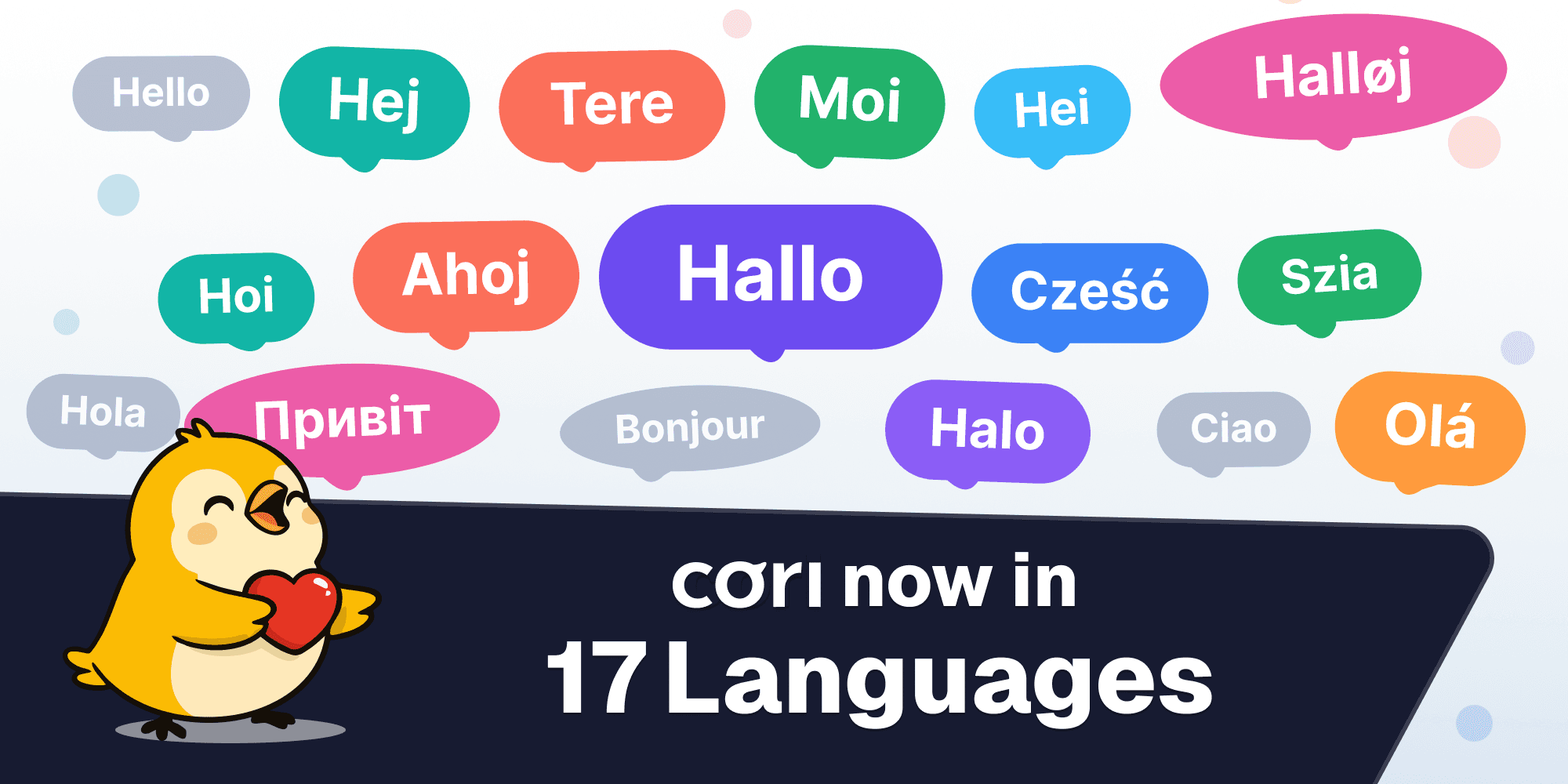
How well your own practice can mesh with the recordings from rehearsal is something we describe in the post Making better use of choir practice recordings. And because the Learning Path is available in 17 languages, everyone in your choir practises in their own language. What else matters when picking a choir app is covered in Finding the right choir app and in the choir app comparison 2026 – and to see how the Learning Path fits into the rest of cori, take a look at the feature overview.
Questions, wishes or feedback from your rehearsal go to info@getcori.app – we read along and usually reply within one working day.
Discover more: All cori features · Try cori free for 30 days
Get your choir ready for the future
So you can concentrate on what matters most: the music.
Share this article
More Articles

The 6K practice room for the 2027 season: now in the browser too
6K UNITED! has opened the 2027 season, and cori's 6K practice room is ready: every song with chapter markers, follow-along lyrics and sheet music, groups and appointments for teachers, and for the first time in the browser as well, with nothing to install. What's new and how you get started.
A choir app in your language: cori now comes in 17 languages
The choir app cori is now available in 17 languages – from German, English and Spanish through Polish, Finnish and Estonian all the way to Bahasa Indonesia and Ukrainian. Here's how to pick your language.